Introduction :
There is a myth about how the game of chess originate – king Ravana'swife Mandodari Devi introduced the game of chess to prevent Ravana from making war.
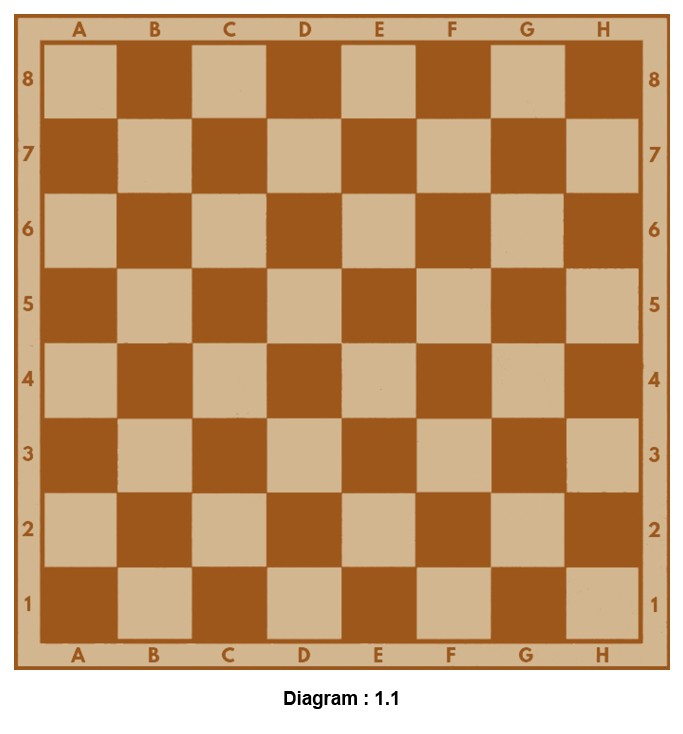
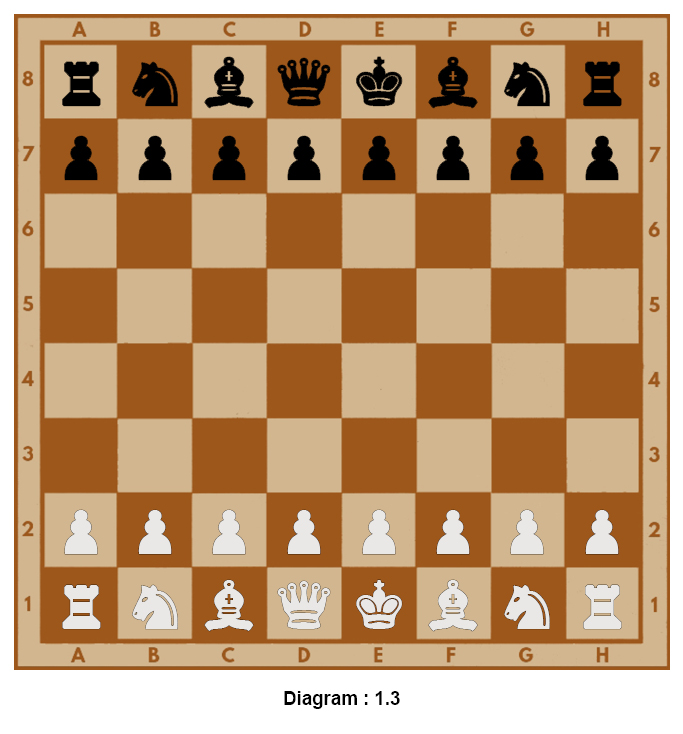
The game of chess is a war that is played by two players. The board is made up of 64 squares which are alternated light (white) squares and dark (black) squares. The board is to be set in such a way where each player will have light square on his/her right-hand corner side. The queen stands on the square of her own colour, beside the king.
Each side is provided with an army of 16 chessmen (8 pieces and 8 pawns)where one is coloured white and another is black. The person playing white starts the game by moving one of his chessmen.
The players take turns to move chessmen or to capture enemy chessmen. A move can be made by transferring one of your own chessmen to another square. Only one chessman can be played at a time. Though there is an exception of the move castling which we will discuss afterwards.
One can capture any of the enemy chessmen except the king, by removing the captured chessman and placing his own chessman on that square. Then the captured chessman is kept out of the board and it does not play furthermore. Only one chessman of opposite colour can be captured at a time. After promoting a pawn to the last rank (eighth rank) any of the chessmen of same colour can take the place of that pawn except another pawn or king (see pawn promotion).
Chess board :
Diagonals, files and ranks
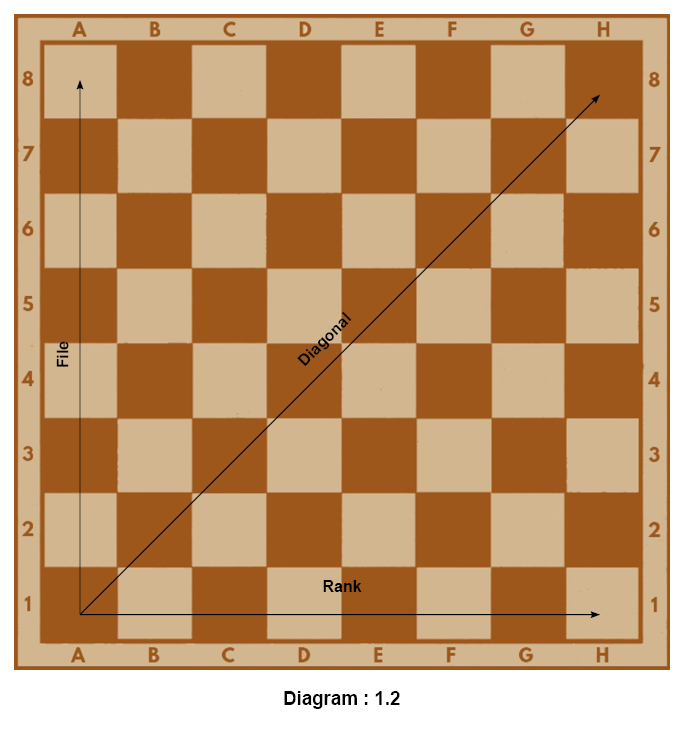
The chess board consists of 64 squares - eight squares wide and eight squares long. The light and dark squares alternate in any row and the slanted squares of same colour are called diagonal (see diagonal arrow). The chess board is placed in such a way between the players so that each player has white square in his lower right-hand corner. The rows that point vertically from one player to the other are called files (see vertical arrow rows are called ranks (see horizontal arrow).
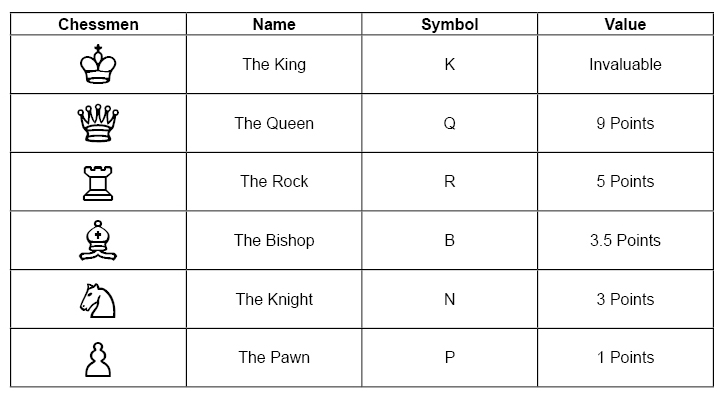
Values of the pieces:
The pieces are given different points as per their playing strength.These points have on direct control on the result of the game but in general,the side having gained more points is in materially advantageous position.But on the other hand the side having less points (materially) can win the game outright if he/she can checkmate his/her opponent. So,the main goal of the game is to checkmate one's opponents king.
The king cannot be captured and when in danger he must be played to a safe square or another chessman must give him guard or the checking piece has to be captured,otherwise The game would be lost. The table below shows how the chessmen should be represented,the symbol and its value.
Two Important Rules of the Game
'Touch and move' and 'I adjust'